Service pages7 min readFinal draft,
Service page copy for adult businesses: say what you do, for whom, and how
For adult businesses, service page copy has one job: tell a visitor quickly what you offer and for whom. Venues, subscription platforms and trade suppliers sell services, not boxes, and their pages often say the least where it matters most. This note sets out a structure for service pages that tells a visitor quickly what you do, for whom, how it works and what it costs.
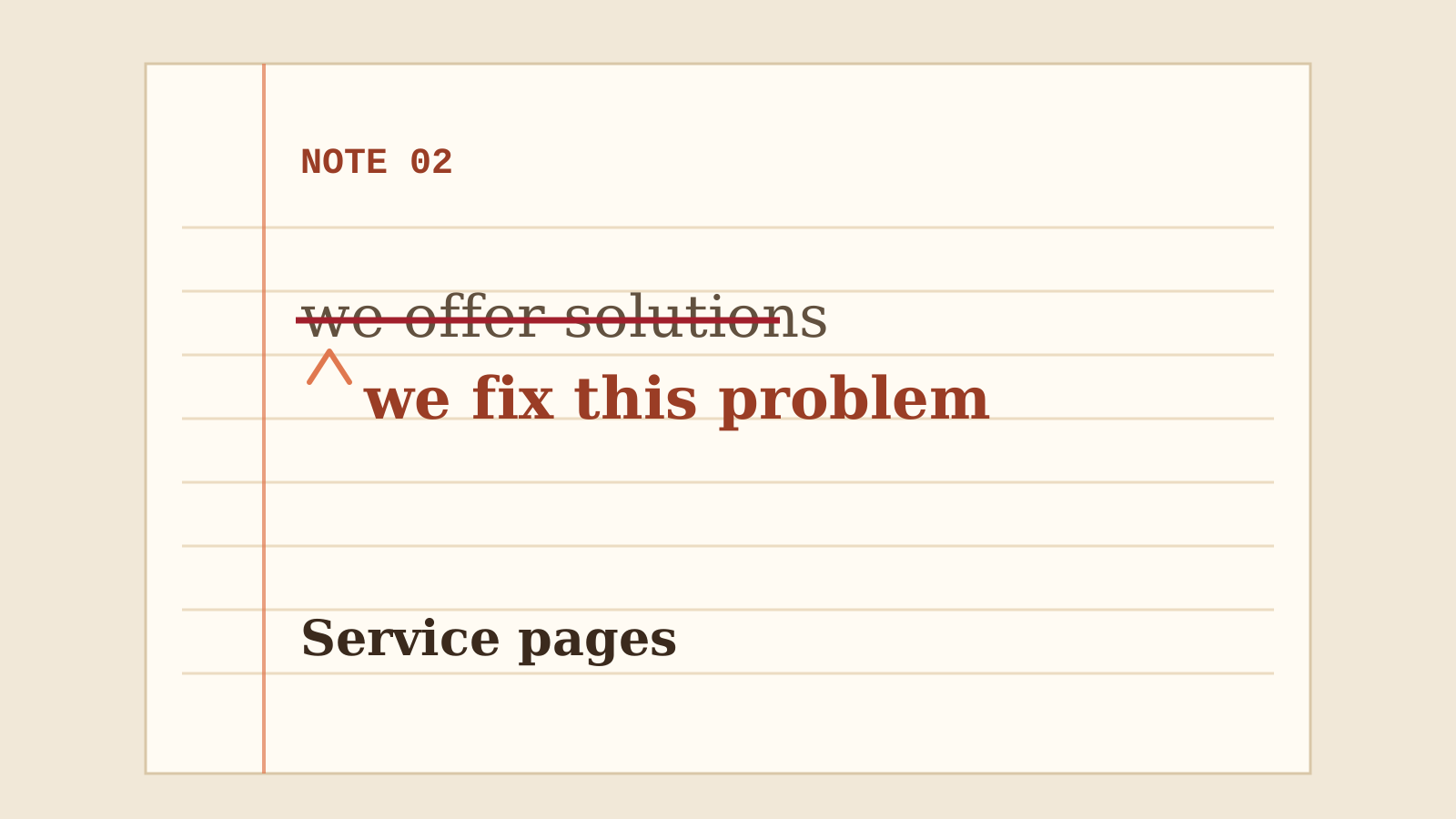
§1Lead with the problem you solve
Service pages often open with the business: its history, its passion, its values. Visitors arrive with a need. Put the need first, in their words, then say plainly that you meet it.
We are a passionate team offering bespoke solutions. Private hire for groups of 20 to 120, licensed until 2am.
Ed.Numbers and hours answer questions. Adjectives raise them.
§2A structure that answers in order
| Section | The question it answers |
|---|---|
| Opening | Is this what I am looking for? |
| Who it is for | Is this meant for someone like me? |
| How it works | What happens if I go ahead? |
| Price or starting price | Can I afford it? |
| Rules and reassurance | Is it safe, legal and private? |
| Next step | What do I do now? |
§3Rules and reassurance
For adult services, the rules are part of the offer. State age requirements, licensing, entry or membership conditions, and how personal details are handled, in plain words and near the top. People who meet the rules feel welcome; people who do not can leave before wasting anyone's time. Nothing on the page should be explicit.
§4Prices and the next step
Show a price or a starting price where you can, and say exactly what the next step involves: a booking form, a free trial, a call. Hidden costs added later are one of the practices the FTC has criticized, and they undo the trust the page has built. The honest alternatives are listed on landing page copy.
§5Different services, same shape
- Venues: capacity, hours, dress code, entry rules, what a first visit is like.
- Subscription platforms: what members get, how verification works, how to cancel.
- Trade suppliers: terms, minimum orders, lead times, how to open an account.
Product pages are a different job, covered in our note on product copy, and the service itself is on copywriting.
§6Before and after: a venue opening
| Before | After | |
|---|---|---|
| Opening line | Welcome to the most exciting night out in the city | An adults-only cocktail bar with live burlesque, Thursday to Saturday from 8pm |
| Who it is for | Everyone is welcome | Adults 21 and over; couples, groups and solo guests all come regularly |
| First visit | Come and see for yourself | Arrive before 9pm for a table; staff explain the house rules at the door |
Imagine a case. The after version answers the questions a nervous first-time visitor has, which is what gets them through the door.
§7Writing the rules without sounding cold
Rules are often written as a list of prohibitions, and that can make a welcoming business sound hostile. Lead with why the rules exist, which is usually the safety and comfort of guests, then state them plainly. "Everyone here is over 21, and we check ID at the door so it stays that way" reassures as much as it restricts. Keep consent and conduct rules visible and specific, and say what staff will do if someone breaks them.
§8Pricing language people trust
Visitors expect to find a price, and vague phrases such as "competitive rates" or "contact us for pricing" send many of them elsewhere. Where prices vary, give a range or a starting price and say what changes it. For memberships, give the price after any introductory offer and the way to cancel the same prominence as the headline price. For events, say what the ticket includes and what costs extra. Clear prices also cut the number of enquiries that go nowhere.
§9Photos, captions and alt text
Service pages for adult businesses often rely on photos, and those photos must be safe for work to appear in search and on most platforms. Show the space, the staff, the atmosphere and the details that matter, such as private booths or accessible entrances, rather than anything explicit. Write captions and alt text that describe what is shown in plain words. They help visitors using screen readers and give search engines context they cannot get from the image itself.
§10A checklist before publishing
- Can a stranger tell from the first line what you offer and who should come?
- Are age, licensing and entry rules stated where a visitor will see them?
- Is there a price, a range or a clear explanation of how pricing works?
- Does every claim have something behind it?
- Would the page be comfortable on a shared screen?
- Does the call to action say exactly what happens next?
§11Keeping service pages current
Service pages go stale quickly: hours change, events end, prices rise, staff move on. Give each page an owner and a review date, at least every quarter and before every seasonal peak. Out-of-date details cost more than missed sales; they erode trust in everything else the page says. The broader copy service is set out on copywriting, and landing pages for campaigns on landing page copy.
§12Accessibility and inclusion on service pages
Visitors need to know whether a venue or service works for them before they arrive. State step-free access, accessible toilets, quiet spaces and any accommodation you can make, plainly and without euphemism. Say who is welcome in specific terms where it matters, such as LGBTQ+ nights or events for couples, rather than a generic "everyone welcome". A page that answers these questions saves awkward calls and brings visitors who already know they will be comfortable.
§13Service pages and local search
For venues and shops, the service page and the Google Business Profile should tell the same story: the same name, hours, address and description of what you offer. Link the profile to the service page rather than the home page, and keep both updated at the same time when anything changes. Consistency between the two is one of the simplest signals of a trustworthy local business, for searchers and for search engines alike.
§14Measuring a service page
Track the page by what it is for. For a venue, that may be booking clicks, calls and direction requests from the page; for a platform, new sign-ups and how many of them are still members after their first billing cycle; for a service business, enquiries that turn into work. Compare the months before and after a rewrite on the same traffic sources, and read the enquiries themselves, since they show what visitors still need: if people still ask questions the page should answer, the copy has more to do. The full service is described on SEO content.
§15One page or several
A business with several distinct services, such as a venue with club nights, private hire and workshops, usually needs a page for each, linked from a short overview. One long page that tries to cover everything ends up answering no single search well. Each service page should still repeat the essentials, such as location, age policy and how to book, so a visitor who lands on it directly has everything they need.
§16Background sources
Source organizations for this guide. Check their sites for the newest version.
QQuestions
Should we show prices on service pages?
Where you can, yes, or at least a starting price. Some visitors who cannot find any price simply move on to a competitor.
How do we write about a venue without being explicit?
Describe the setting, the licensing, the entry rules, the dress code and what a first visit is like. That answers more questions than any explicit description would.
Do B2B suppliers need different copy?
The structure is the same, but trade buyers want terms, minimum orders and lead times near the top.